
Magnesium Aisle
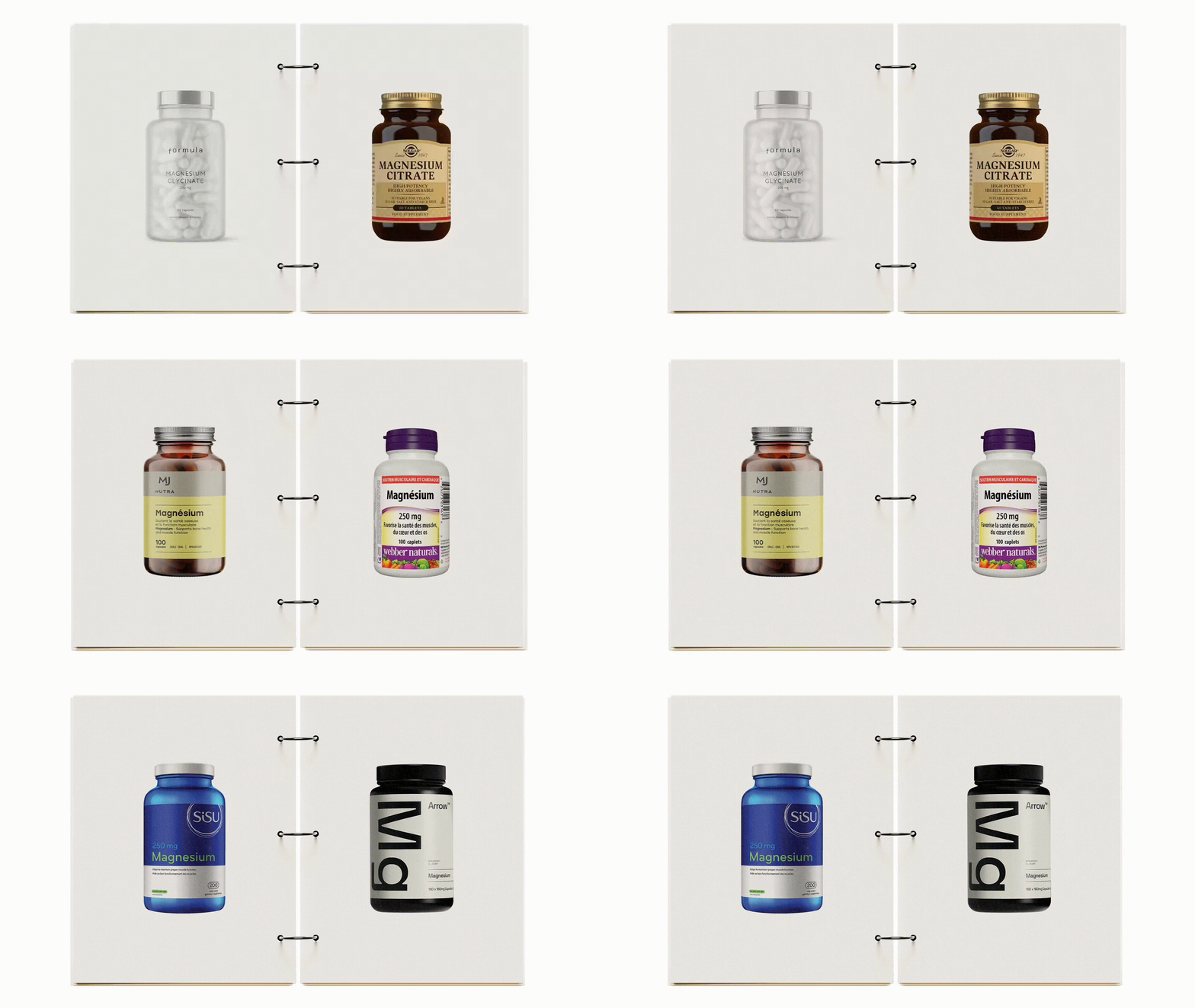
You’re in the supplement aisle holding two bottles of magnesium. Same dosage, same ingredient list, same “third-party tested” badge. Both promise better sleep, fewer cramps, calmer nerves, and a future version of you from your vision board.. How do you choose?
You can’t run a lab test in the aisle. You can’t verify purity, sourcing, or whether that little badge means anything beyond good graphic design. You have 30 seconds and a decision to make. So you do what we always do when the information is incomplete — we choose the one we trust.
But where does that feeling of trust come from? Is it a default preset in our head? How do we know what’s trustworthy what’s not?
What Trust Actually Is
It turns out trust is not certainty. It’s permission.
It’s the brain’s way of saying, “I don’t have the full truth, but I have enough signals to move forward”. And we do this constantly because modern life is basically a sequence of choices we can’t fully audit.
You trust a friend not because you’ve run a controlled study on their honesty but because their behavior has been consistent enough that your nervous system relaxes around them. You trust an airline not because you understand aerodynamics, but because regulation, track record, and repetition make flying feel normal (in fact my friend’s mom has a degree in aviation engineering and is terrified of flying, proof that understanding the system ≠ trusting it, it’s the brain deciding which signals are strong enough to move forward).
The more you look for examples, the more obvious the pattern becomes: we almost never get the whole proof. We get cues, and trust is the decision we make from them.
Where trust Takes Shape
That’s where branding enters — not as decoration, but as a trust interface. Brand is how a product speaks before it performs. It’s the visible layer that helps people decide whether something seems safe, legitimate, worth it, and very often “does it feel like it’s for me”.
And interestingly enough not all trust runs on the same code. Sometimes we trust through evidence cues. Sometimes through meaning. Most of the time, we’re stitching the two together without even realizing it “it has to be good, but I choose what feels right”.
Once you notice which kind of trust you’re using, a lot of everyday choices stop feeling random. They start looking like patterns.
Continue reading the full story on Substack.